
Non-Surgical Ear Molding for Babies
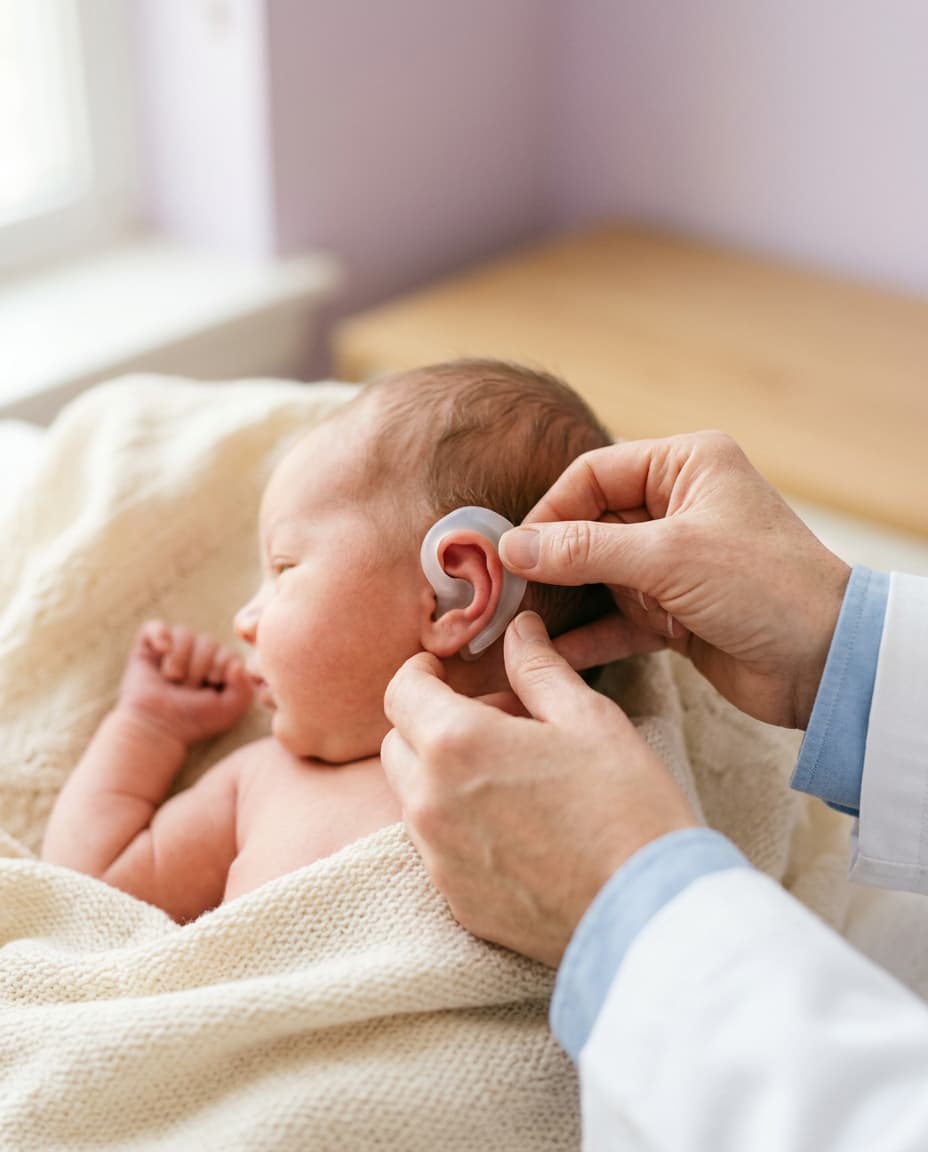
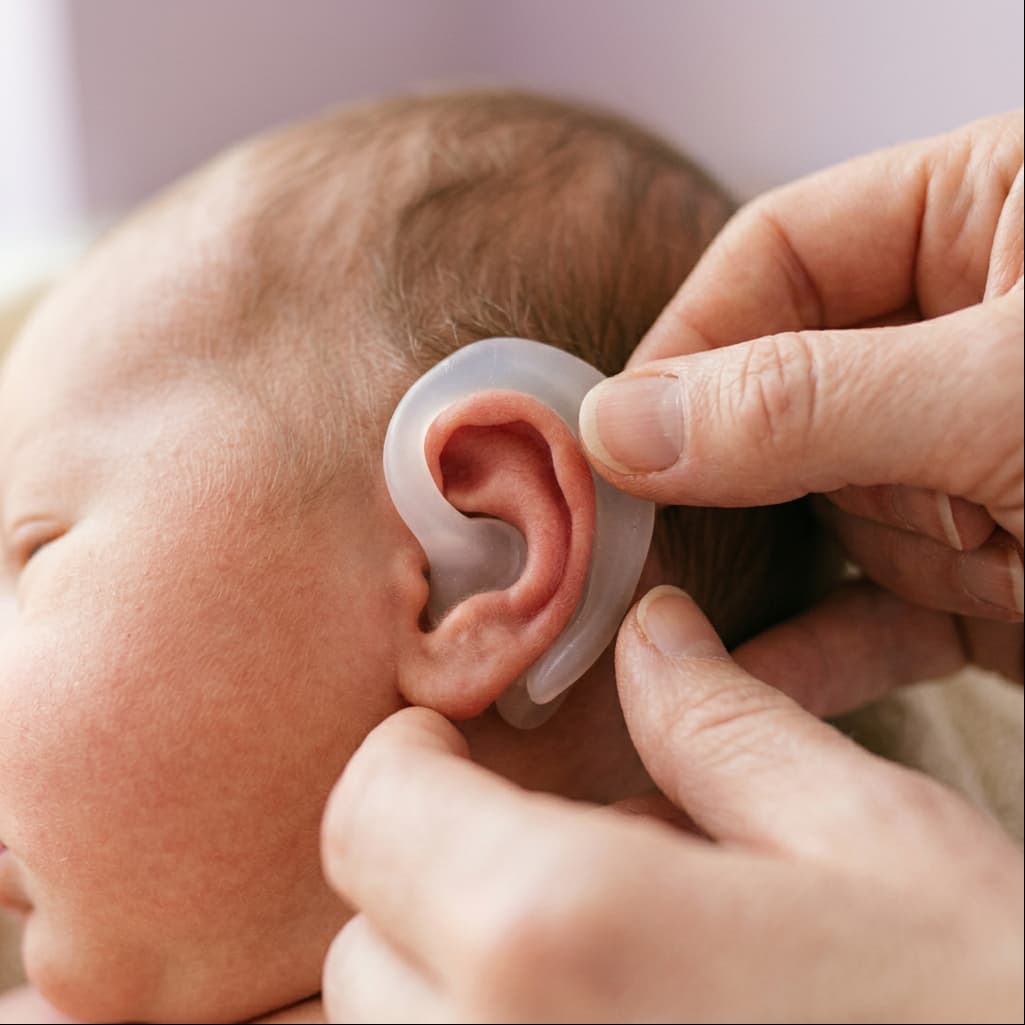
A newborn's ear cartilage is quite soft in the first weeks, thanks to the estrogen hormone passed on from the mother. This special window allows ear shape irregularities to be corrected without surgery, using medical molding systems such as Earwell and Craniowell.
A protective approach with no incisions or anesthesia, one that doesn't disrupt your baby's daily comfort.
90%+
Success rate reported in the literature for treatments started in the first 2–3 weeks
The First 2–6 Weeks Are Critical
Which Ear Shape Irregularities Do We Address?
The most common ear shape irregularities seen in the newborn period, and how ear molding can support each one.

01
Protruding Ear (Cup Ear)
A shape irregularity where the baby's ear sticks out more than usual relative to the skull, generally due to developmental differences in the ear cartilage. It's the most common irregularity seen in the newborn period, and one of the ones most often supported non-surgically with ear molding.
02
Lidding Deformity (Folded Upper Ear)
A shape irregularity where the top of the ear (helical rim) folds forward and downward, or droops — sometimes called a "lopped" ear. Non-surgical ear molding applied in the first weeks supports bringing the folded cartilage closer to its normal anatomical form.
03
Conchal Crus Deformity
The presence of a cartilage band or fold within the ear's concave bowl (concha) that shouldn't normally be there. This structure can disrupt the ear's natural depth and narrow the entrance to the ear canal. Molding treatment in the newborn period aims to flatten this extra cartilage fold.
04
Helical Rim Deformity (Flattened Ear Edge)
A developmental flattening, interruption, or incomplete shaping of the curled cartilage strip that borders the outer edge of the ear (helical rim). While the cartilage is still flexible, non-surgical molding in the newborn period supports this area returning to its natural, curled form.
05
Stahl's Ear Deformity (Elf Ear)
A shape irregularity marked by an extra, third cartilage crus in the upper-outer part of the ear that shouldn't normally be there — sometimes called "elf ear" or "Spock ear", giving the ear a pointed look. Non-surgical molding applied in the first weeks of the newborn period aims to flatten this extra cartilage ridge.
06
Cryptotia (Buried Ear Deformity)
A condition where the upper part of the ear is buried under the scalp; from the outside, the upper fold of the ear appears absent and the postauricular sulcus hasn't developed. While the cartilage is still soft, non-surgical molding in the newborn period supports bringing out the buried cartilage and forming the postauricular sulcus.
07
Microtia and Earlobe Deformities
Covers cases where the ear is noticeably smaller, underdeveloped, or entirely absent (microtia), as well as earlobe irregularities such as clefting, duplication, or attachment. In mild to moderate cases, non-surgical molding started in the first weeks of the newborn period can play an important role in bringing the ear structure closer to its natural form.
08
Combined Ear Deformity
Cases where more than one ear shape irregularity (for example, both a Stahl's ear point and an upper-edge fold) appear together on the same ear, requiring a personalized approach. Non-surgical ear molding applied in the first weeks of the newborn period allows these multiple anatomical differences to be addressed within the same course of treatment.
Frequently Asked Questions About Ear Molding
We've gathered the most common questions about the process.
See All QuestionsThe ideal time is within the first 2 weeks after birth. Non-surgical ear molding started before the cartilage hardens generally gives the most comfortable and fastest results. It's still possible for babies up to 6–8 weeks old; as the baby grows the cartilage stiffens, so the chance of success may decrease and treatment may take longer.
No, it's a non-surgical method generally considered painless. The devices used are made of soft, medical-grade silicone suited to a baby's sensitive skin. They're designed not to block the ear canal opening, so hearing isn't negatively affected.
Some mild cases may show a tendency to self-correct; however, in most cases the irregularity becomes more noticeable as the baby grows, particularly depending on sleeping position. Since the treatment window closes quickly, we recommend consulting a specialist in the first days rather than waiting.
We don't recommend it. Unsupervised use of non-medical-grade products at home can cause the postauricular sulcus to close up and lead to skin infections. To avoid making the anatomy more complex, this should be done by a specialist using professional molding systems.
To keep the medical adhesives intact and prevent skin irritation, the ear should avoid direct contact with water during treatment, and the head area should be washed with special protective methods during baths. We handle the necessary skin care and hygiene checks at your weekly follow-up visits.
For treatments started within the first 2–3 weeks after birth, the success rate reported in the literature is above 90%. The main factors affecting success are the age treatment begins, the flexibility of the cartilage, and consistent wear of the device. Success may be lower in cases started late or without regular follow-up.
No, molding is planned individually and locally. If only one ear has a deformity, a correctly sized device is placed on that ear alone. Since mild irregularities in the other ear can go unnoticed, both ears are assessed at the first examination.
Noticeable deformities not corrected in the newborn period generally don't resolve on their own as the baby grows and can lead to aesthetic concerns later. Ear molding applied early has the potential to spare your child from needing otoplasty (ear surgery) and general anesthesia later on.
Don't Miss the Right Time for Your Baby
Reach out to have the ear structure assessed, or book an appointment directly.
Book an Appointment